Introduction
The Concussion in Sport Group (CISG) defines concussion as a “blow to the head neck or body resulting in an impulsive force being transmitted to the brain … [and] results in a range of clinical symptoms and signs that may or may not result in a loss of consciousness”.1 Common acute concussion symptoms include headache, nausea, confusion, photophobia and impaired balance.2 Sideline identification of concussion is crucial to avoid further injury.3 Within amateur sport, this is often completed by volunteers with limited medical training. Patients are commonly not assessed and managed appropriately, leaving patients and their families unaware of existing concussion guidance.4 It is estimated that a substantial proportion of concussions5,6 do not receive clinical attention, leaving significant knowledge–practice gaps.
The HeadCheck mobile app was developed in 20157 in a collaboration between the Murdoch Children’s Research Institute (MCRI), Curve Tomorrow and, in 2017, the Australian Football League, to provide the community with free, gold-standard evidence on identification and immediate management of suspected concussion across the lifespan,8 including warning signs for where further, urgent care may be required. Initially, the app focussed on children and adolescents, with expansion to now include guidance for adults. To ensure accurate and accessible sideline concussion recognition, the original HeadCheck app was developed as a smartphone-based, interactive tool designed for adults in the community caring for children, adolescents or for themselves. HeadCheck provides a guided, step-by-step digital workflow. Typically, parents, coaches, trainers or guardians complete the questions, with the adult entering responses on behalf of the child or adolescent. An updated version of the HeadCheck app (Version 1.4), named Concussion Essentials (CE), has been developed to disseminate concussion guidelines in an operational format that are consistent with the CISG Amsterdam recommendations, the Australian Institute of Sport (AIS) return-to-sport guidelines and the Australian Football League (AFL) Community Concussion Guidelines. CE also reflects changes in best practice for sideline identification and management of sport-related concussion. The app has previously been described,7 and here we highlight the critical updates to the app and report early usage patterns following release, which provide insight into the rate at which users engage with key recovery guidance.
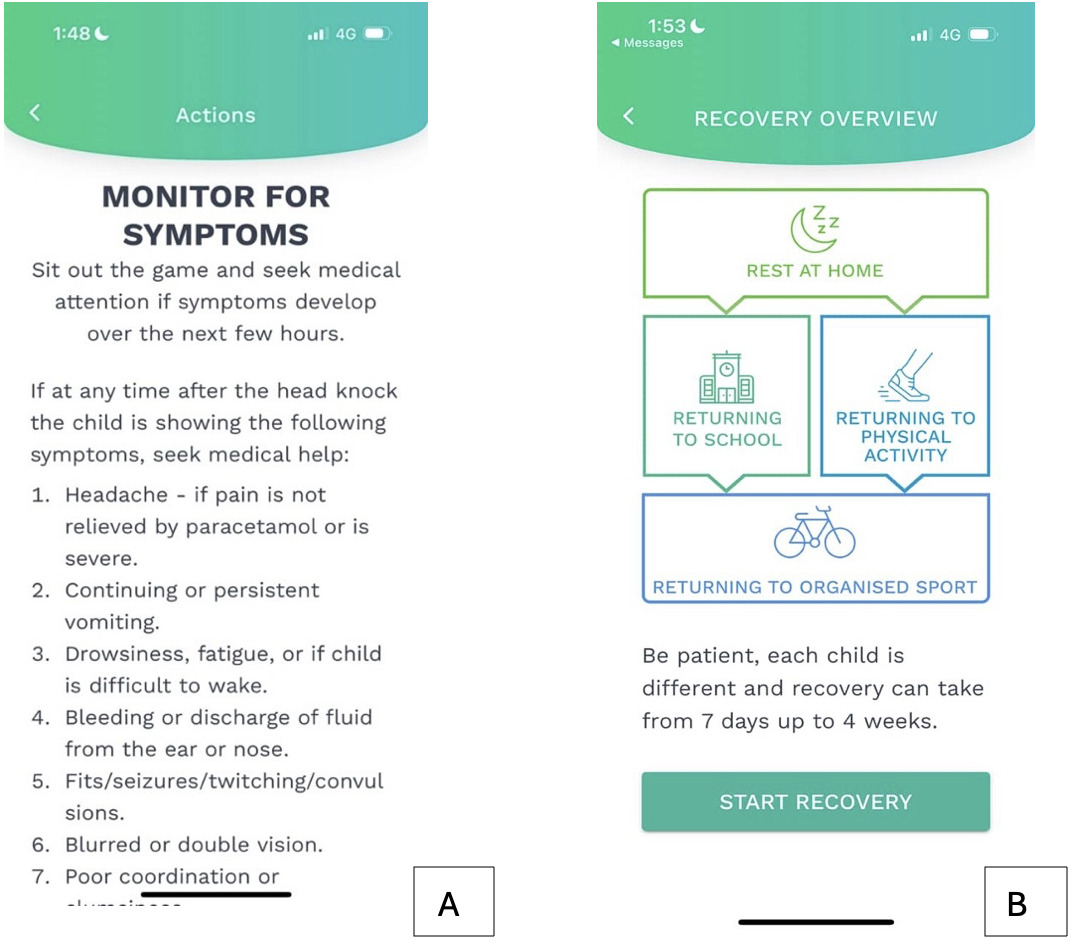
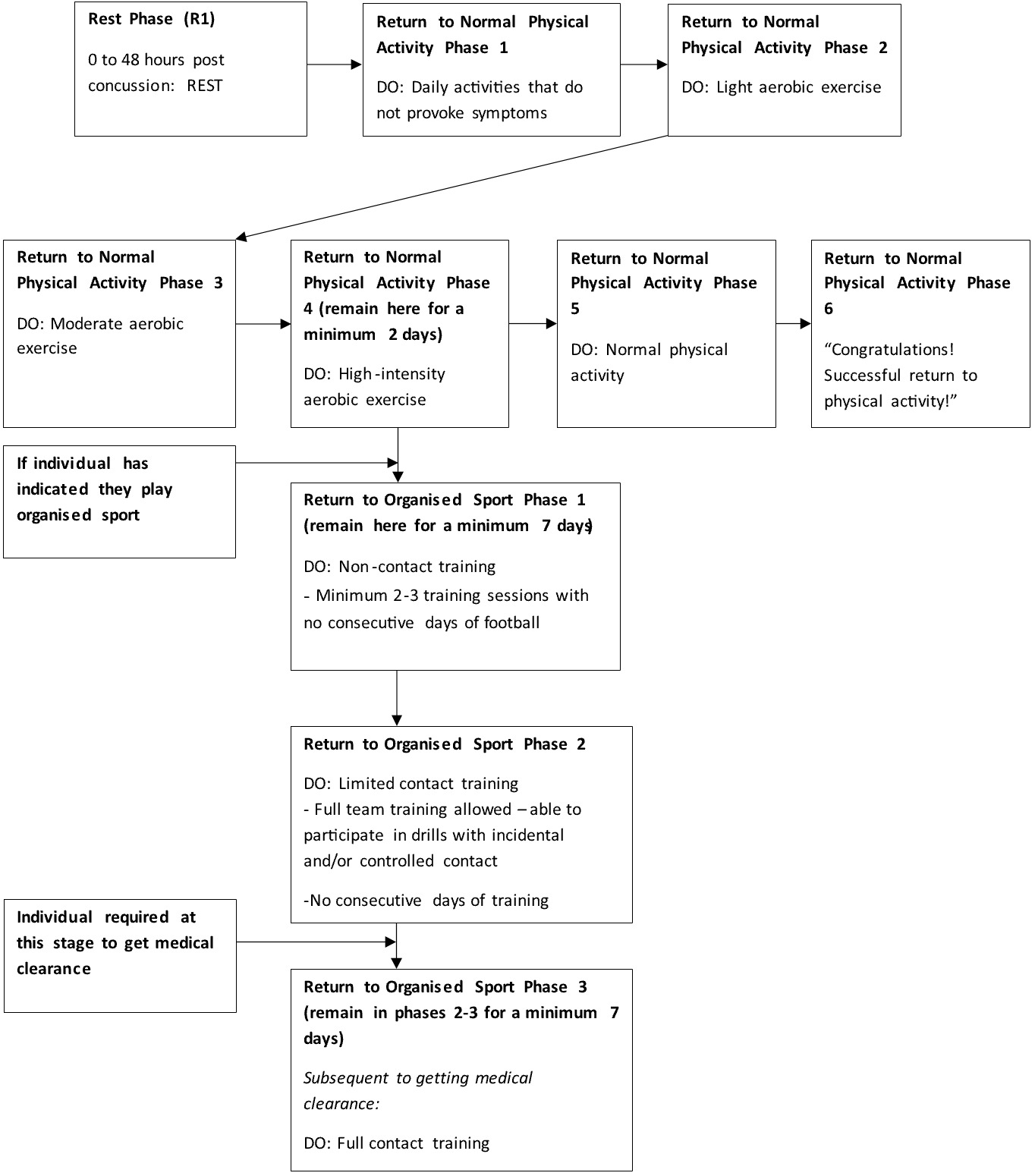
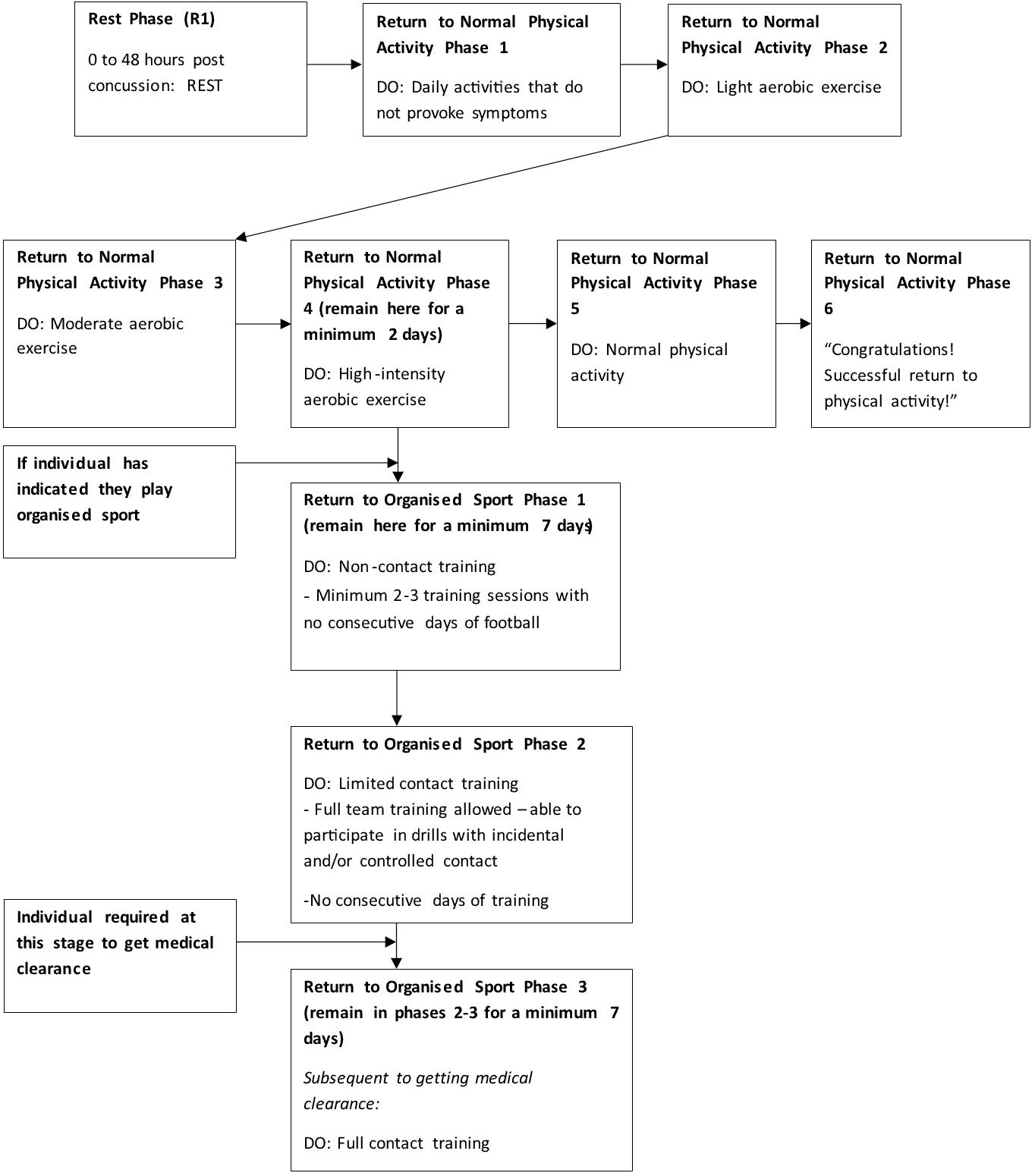
One key update is the inclusion of the revised Concussion Recognition Tool (CRT6), designed for non-medical users to recognise a suspected concussion. Another significant change is the extension of the recovery programme from a minimum of 14 days post-injury to 28 days, consistent with the AIS guidelines, which recommend not returning to contact sport until a minimum of 21 days, even if symptom free,9 as well as research evidence suggesting 30% of children and 35% of adults10 remain symptomatic at 28 days post-injury. The app will inform users of the 21-day rule if they report no symptoms prior to the 21 days. The recovery programme assists users to independently manage their return to sport by following evidence-based recommendations tailored to their stage of recovery (i.e. the symptoms recorded in the app’s symptom checklist; see Figure 1(A)). CE follows the current CISG recommendations of a maximum of 48 hours relative rest and guides users through a graded return to physical activity, from gentle physical activity through to high intensity, based on their symptom profile (Figures 1(B) and 2).
_app_for.png)
There are geographical limitations imposed by the tech companies for access to app stores via smartphone devices, and with the rapid uptake of the CE app, we have developed a companion website (www.headcheck.com.au) to provide for international access.
Materials and methods
To assess user uptake following the release of the latest app version with these revised features, and to ensure compliance with contemporary published guidelines, we conducted a retrospective review of anonymous app usage data from the latest version of the CE app. Data for this analysis were collected from July 2024 to May 2025. Descriptive statistics summarised app usage. Ethical approval was not required, as all data were anonymous and collected according to the app’s privacy policy.
Results
Following the July 2024 app update, by 2 May 2025 a total of 5,983 new users had accessed the CE app, with 2,348 incident reports made during this time. Injuries were most often reported as occurring at home (576 instances), followed closely by organised Australian football play (540 instances). Most users submitting incident reports (n = 1,406) indicated no prior history of concussion, highlighting the importance of providing evidence-based educational resources for injury management. In total, 394 users completed all aspects of the recovery programme. It should be noted that the app does not require all users to undertake every element of the recovery programme, and some individuals may fully recover before completing all aspects. Engagement timing demonstrated that users accessed critical recovery support early. Users of the Return-to-School/Work support did so an average of 5.3 days post-injury, and users commenced the physical activity module at an average of 4.0 days post-injury. The return-to-sport/organised play module could only be accessed after completing the rest module and stages 1 to 4 of the return to physical activity module. There was a 16.9-day average between injury and commencing the return-to-play module. These patterns indicate that users progressed through recovery in a sequence and time frame broadly aligned with the most contemporary concussion guidelines.
Discussion
The CE app provides the community with evidence-based, accessible information on concussion identification and recovery support. The observed engagement timing with early uptake of symptom-guided recovery components and appropriately timed progression to return-to-play demonstrates real-word usage patterns consistent with current best-practice guidelines. Given that concussion is oftentimes poorly understood, with few specialist concussion clinics available, CE’s widespread use and guideline-aligned engagement patterns support its utility as an accessible and practical tool to assist individuals throughout their recovery. Greater awareness of concussion identification and recovery support is key to ensuring every individual with a concussion receives best-practice treatment.
Summary points
-
Community concussion management gap: Concussions in amateur sport and home settings are frequently assessed by non-medical individuals, and many injuries do not receive clinical attention, contributing to knowledge–practice gaps.
-
Digital solution aligned with guidelines: The updated HeadCheck app translates concussion guidelines into an accessible, step-by-step workflow for sideline recognition and recovery management.
-
Major updates include:
-
Integration of the Concussion Recognition Tool 6 (CRT6) for non-medical users.
-
Extension of the recovery programme to 28 days, consistent with AIS return-to-sport recommendations.
-
Symptom-guided recovery pathways and staged return to physical activity and sport.
-
-
Strong early uptake and real-world use: Between July 2024 and May 2025, 5,983 new users accessed the app and 2,348 injury incidents were recorded.
Potential Conflicts of Interest
GD is a member of AFL Concussion Working Group. VA reports shared costs of app development with AFL. All other authors declare no conflict of interest.
Data Availability Statement
De-identified aggregate data can be made available by the senior author, VA, upon reasonable request.
Funding Disclosure
No funding was obtained specifically for this research.